VOXORA // Voice & Chat AI Agents for European Businesses
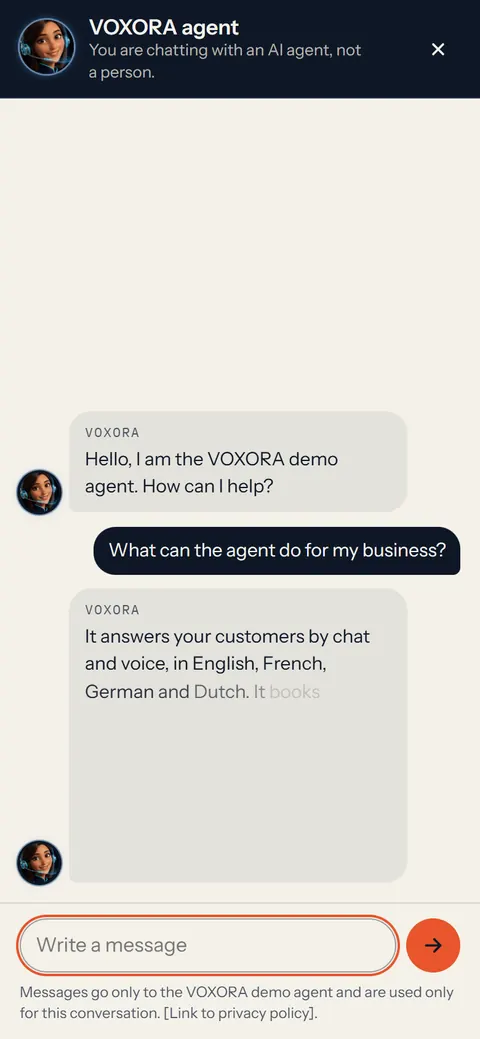
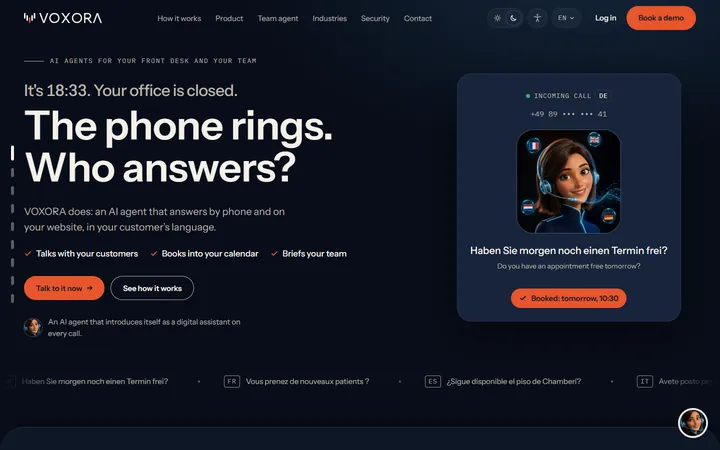
in one line One platform, two AI agents: a front agent that answers a business’s customers by chat and live voice, books into the real calendar and hands over to people, and a team agent that works for the staff and acts only after a person approves.
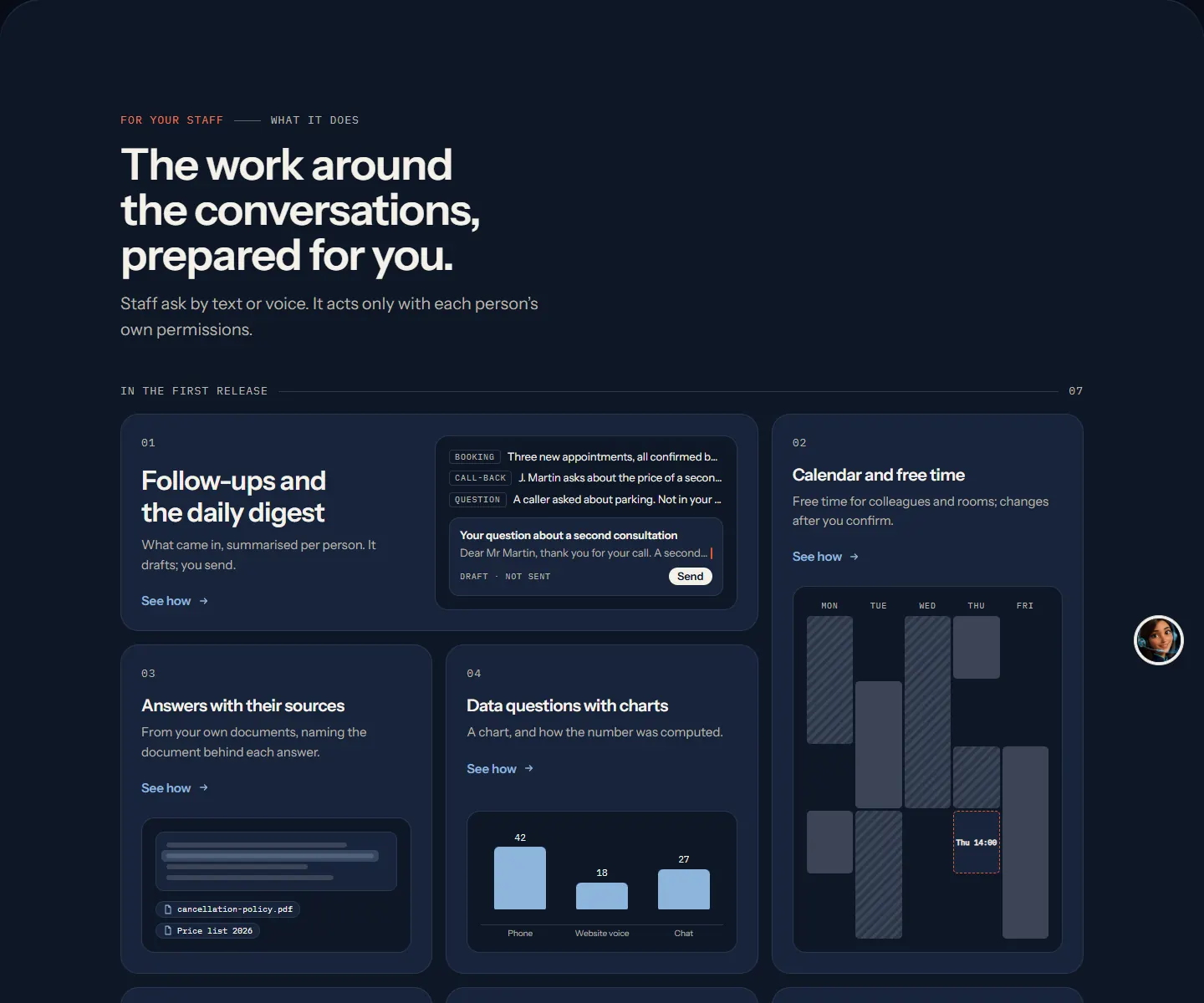
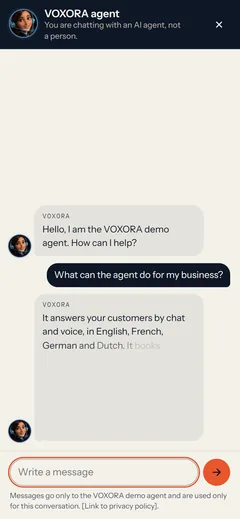
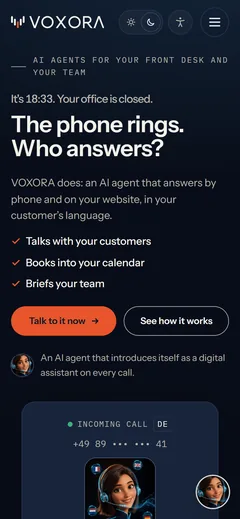
Small and medium European businesses — clinics, restaurants, hotels, shops — miss calls and messages when the office is closed or the team is busy, and every missed contact can be a lost booking. At BeLogic AI I build VOXORA. The front agent answers customers in their language from the company’s own documents, finds a free slot, holds it, reads it back and confirms the booking, or arranges a call-back; it says it is an AI at the start and never gives medical advice. The team agent prepares follow-ups, keeps calendars straight and answers staff questions; it proposes, and a person approves. Today it is a working MVP: text chat runs end to end with a real model and the website is live, and phone calls, the staff console and the team agent come in the next releases.
"With a real model, the clinic agent could not book: it did not know today’s date or the clinic’s time zone. I added a rule-based date tool for six languages (243/243 on its test set), told the agent the local date and time, and let the slot search take an exact time. First answers took about 7 seconds, so embeddings moved to the background and search now waits at most 1.5 seconds before answering from full text."
- ▸ One Graph for Every Business: the agent is a single LangGraph graph; persona, rules and tools come from a versioned configuration, so a change is a publish, not a deployment, and models are reached only through an internal LLM gateway.
- ▸ Tools as Data: every tool is a versioned manifest that a gateway runs only if it is bound to the agent, behind an allowlist and a kill switch — defence in depth against prompt injection.
- ▸ 26 Microservices, Isolated by Tenant: Python and FastAPI, each with its own PostgreSQL database; identity only from signed tokens, forced row-level security, and health records in their own FHIR-aligned service.
- ▸ Requirements First, Every Change Gated: a 14-chapter requirements specification that every feature traces to; 1,553 unit, 308 integration and 158 website tests with a ratchet, plus type checks and security scanners.
how it works One conversation, through the platform
 Customerwebsite chat or live voice in the browser
- channel-servicewidget sessions
- agent-orchestratorone LangGraph graph for every business
- llm-gateway · agent-tool-gatewaymodel routing and metering · allowlist and kill switch
- knowledge · scheduling · handover · tenantanswers with sources, slots and bookings, call-back tasks, local dates